Page Builder or Block Theme for Client Sites?
If you build sites for clients, the choice isn’t only about what’s fastest for you to build. It’s about what the client can safely edit, how the site performs, and what maintaining it looks like three years from now. Here’s how page builders (Elementor, Bricks, Oxygen, Breakdance) compare with block themes (the WordPress Site Editor and Gutenberg) for client work.
Side by side
| Page builder | Block theme | |
|---|---|---|
| Build speed (for you) | Very fast, visual | Fast for content, slower for complex layouts |
| Design control | Very high | High with theme.json, patterns and custom blocks |
| Client editing | Powerful, easy to break layouts | Normal WordPress editor; lockable patterns and blocks |
| Performance | Depends on builder and discipline | Lean by default |
| Content portability | Tied to the builder | HTML in the post, works with any theme |
| Licensing | Paid license, renewals | Free |
| Long-term risk | Builder changes direction, rewrites | Follows WordPress core |
What clients actually do
Most clients edit text, swap images, publish posts and occasionally add a section. They rarely redesign pages. For that job, less is more: fewer controls, fewer ways to break a layout. Block themes shine here with locked patterns (editors change the content, not the structure) and custom blocks (a “Testimonial” or “Pricing table” with just the fields they need).
Where builders still make sense
- Highly bespoke, design-heavy marketing sites that the client doesn’t edit much.
- Teams already fast in a builder, with templates and a component library.
- Projects where the client explicitly wants to design pages themselves in a visual tool.
The block theme workflow for agencies
- Design system in
theme.json: colors, fonts, spacing, layout widths. Or use Tailwind with Winden and pass the tokens into Gutenberg’s controls. - Patterns for sections (hero, CTA, FAQ), locked where needed.
- Custom blocks for anything with data or strict design: cards, team members, pricing, post lists. With FanCoolo WP you build them in PHP, with visual sidebar fields and nested blocks, without React.
- A tidy admin for the handover: a custom dashboard and hidden menus the client doesn’t need.
Verdict
For sites clients will edit and you’ll maintain for years, a block theme with patterns and custom blocks is usually the safer, faster and cheaper choice. Builders remain great for design-first sites that change rarely.
Comparing specific builders? See Oxygen vs Gutenberg, Bricks vs Gutenberg and Elementor vs Gutenberg.
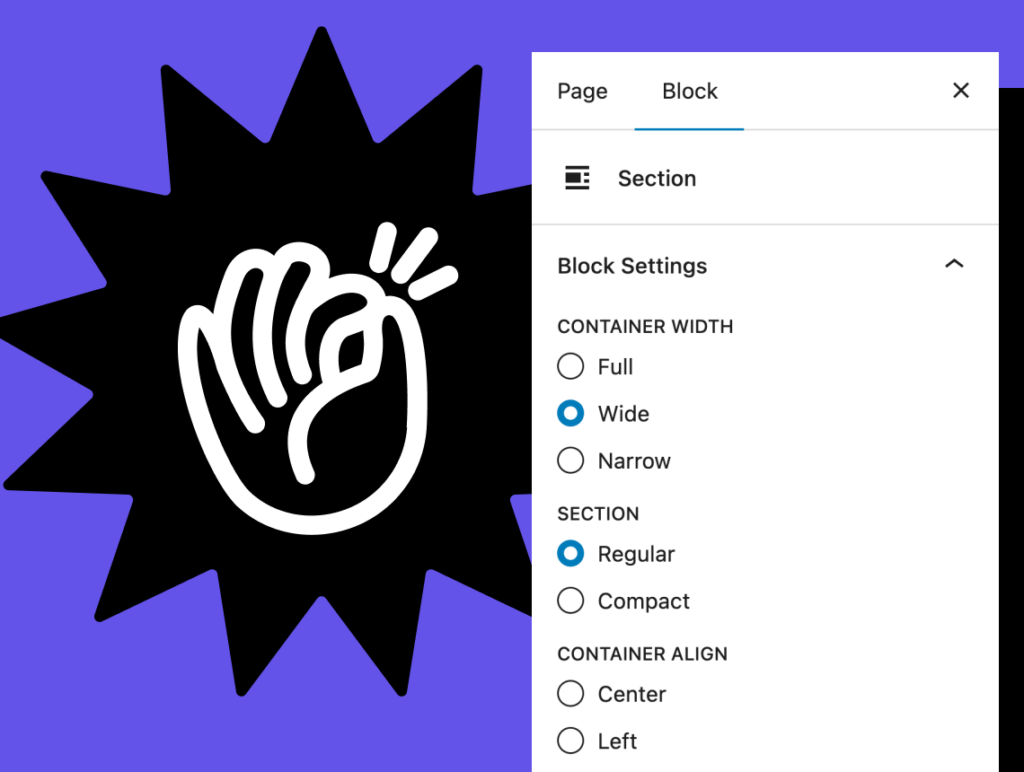
Custom blocks for client sites
FanCoolo WP builds native Gutenberg blocks in PHP, with visual fields, nested blocks and symbols. No React.
More comparisons
- Oxygen vs Gutenberg in 2026: Which Should You Build With?
- Bricks vs Gutenberg: Which Is Better for Your WordPress Site?
- Elementor vs Gutenberg: Which Should You Use in 2026?
- ACF Blocks vs Native Gutenberg Blocks: Which Should You Use?
- Custom Gutenberg Blocks: React or PHP?
- WordPress Code Snippet Plugins Compared (2026)
- Self-Hosted Plugin Updates vs WordPress.org: Which Is Right for Your Plugin?